
magazine

Published 11/02/2026
Published 11/02/2026
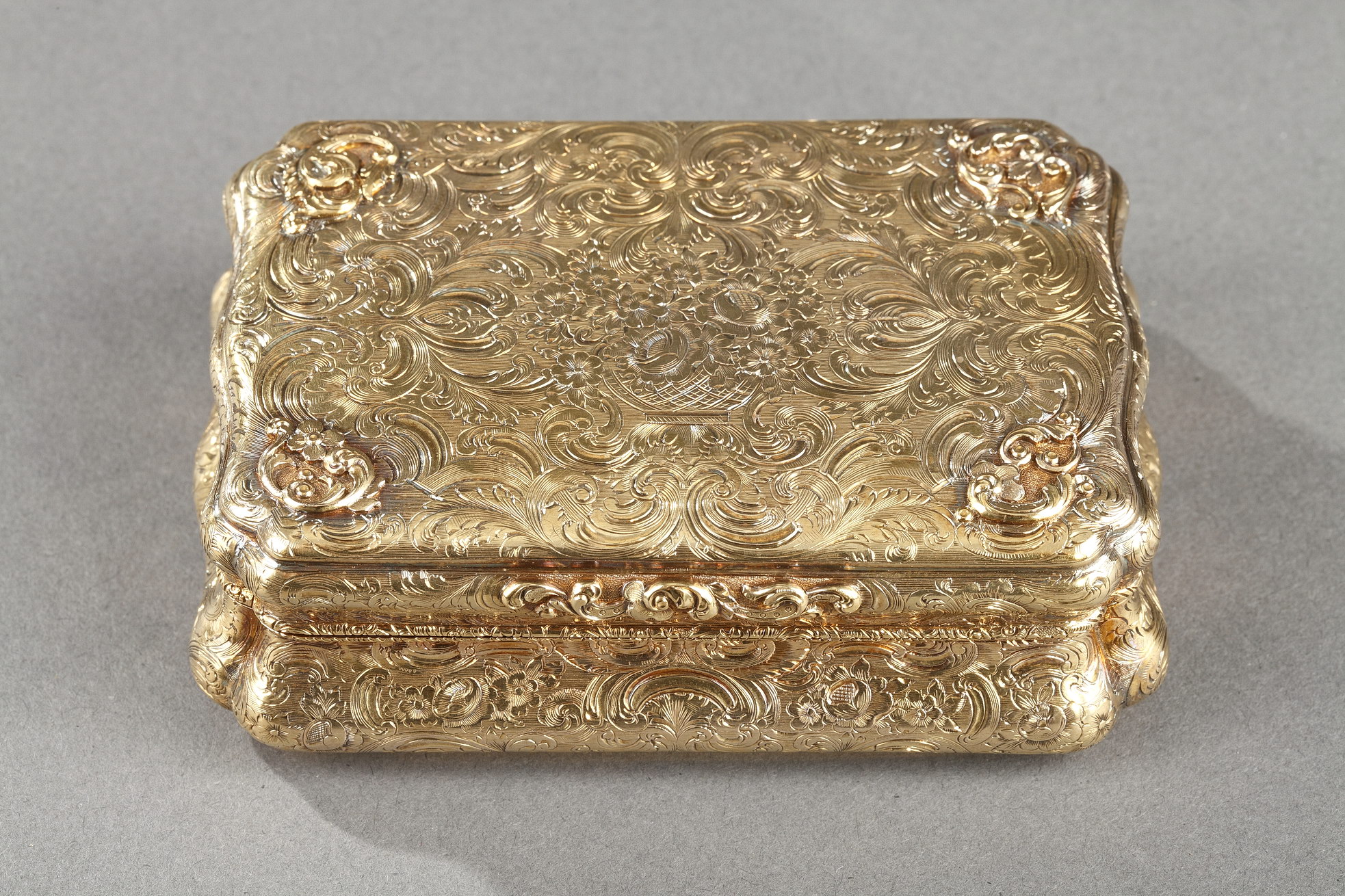
- The progressive exodus of Huguenots following the revocation of the Edict of Nantes by Louis XIV in 1685, which pushed many Huguenots, including hundreds of goldsmiths, to leave France.
- The French Revolution in 1789, which destabilized the French luxury economy.
- The strategy of German courts, which welcomed these French artisans to compete with Paris and attract an aristocratic clientele eager for luxury.
1. The Revocation of the Edict of Nantes (1685) and the Progressive Exodus of Huguenot Goldsmiths to Germany in the 17th Century
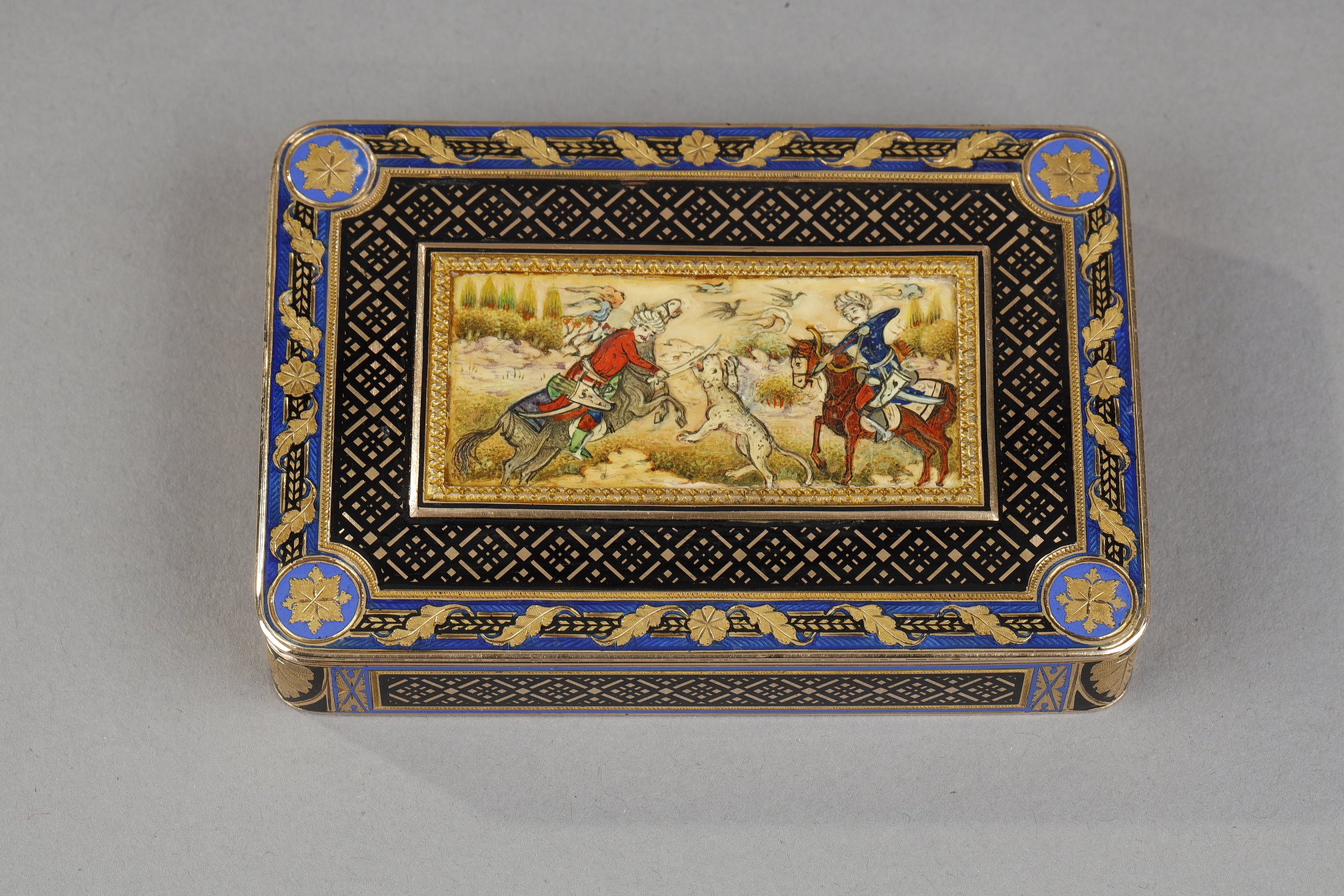
The Shock of the Revocation
- 200,000 to 300,000 Huguenots left France, including highly skilled artisans (clockmakers, weavers, goldsmiths).
- Berlin, Hanau, and Dresden became centers of refuge, thanks to edicts like that of the Great Elector of Brandenburg (1685), which offered tax exemptions and workshops to refugees.
Why Germany?
- Geographical proximity (ease of crossing the Rhine).
- Economic dynamism: the courts of Saxony and Prussia wanted to modernize their manufactures.
- Established Huguenot networks.
Names That Made History
- Pierre Germain (a family of the king's goldsmiths): his son François-Thomas Germain worked for Frederick II of Prussia in Berlin.
- Jean-Valentin Morel: settled in Dresden, he created gold and gemstone boxes for Augustus III of Saxony.
- The Roettiers brothers (engravers for the Paris Mint): they introduced new chasing techniques in Germany.
2. International Fairs in the 18th Century: From a Showcase of French Know-How to Its Decline
- Showcase their creations to a European clientele (nobility, bourgeoisie, diplomats).
- Exchange techniques with German, Italian, or Flemish artisans.
- Obtain prestigious commissions, such as adornments for the courts of Saxony or Prussia.
- Flight of clients (the aristocracy was persecuted or emigrated).
- Looting of Parisian workshops (precious metals were requisitioned for war).
3. Strategy of the German Courts: Competing with Paris German rulers leveraged the Huguenot exodus to:
1- Create royal manufactories:
- Dresden: Augustus the Strong founded the "Grüne Gewölbe" (Green Vault), a treasure chamber displaying the works of French goldsmiths.
- Berlin: Frederick II attracted medal engravers for his royal mint.
2- Attract the European aristocracy:
- Princes published catalogs of their collections to show they could rival Versailles.
- Example: the gold service of the Saxon court (1730), made by Huguenots, was offered to the King of Poland to seal an alliance.
4. Prestige Marks: The French Legacy in Foreign Lands
What is a Prestige Mark?
- Capitalize on Paris's reputation (synonymous with luxury).
- Circumvent local regulations (some German workshops did not have as strict a hallmarking system).
Why Are These Marks So Important?
- Proof of know-how transfer: French techniques (such as rose-cut diamonds) spread to Germany.
- Political stake: the courts of Saxony and Prussia subsidized these workshops to weaken Paris, then the world capital of jewelry.
- Heritage value: these objects are now sought after by collectors (e.g., a snuffbox signed "Delon" sold for €120,000 at Sotheby's in 2021).
Conclusion: A Story of Gold and Exile

Published 09/01/2026
Published 09/01/2026
Gold snuffboxes from the 18th and 19th centuries embody a refined art form, combining craftsmanship, social symbolism, and aesthetics. Luxury items reserved for the elite, they reflect the customs of an era when snuff (dry, often flavored tobacco powder) was an accessory of distinction. In this article, we explore their history, characteristics, value, and place in today's art market.
I. The Golden Age of Snuffboxes : A Historical Overview
18th Century: Snuff-taking is at it's peak
In the 18th century, snuff—introduced to Europe in the 16th century—became a powerful symbol of social status. Royal courts, the nobility, and the wealthy bourgeoisie made it a daily ritual, turning the snuffbox into an indispensable accessory. The finest goldsmiths crafted these luxurious objects, often commissioned by monarchs such as Louis XV and Louis XVI or presented as diplomatic gifts. Paris, along with cities like Geneva, London, and St. Petersburg, emerged as renowned centers of snuffbox production.19th Century: decline and reinvention
The Napoleonic Wars and shifting social norms led to a gradual decline in snuff-taking. Yet, snuffboxes remained highly prized as collectibles, particularly during the Second Empire, when Napoleon III briefly revived the fashion. Stylistic trends evolved: while the 18th century favored the Rococo style (asymmetrical motifs, shells, acanthus leaves), exemplified by master goldsmiths like Jean Ducrollay, the 19th century saw the rise of Neoclassicism (clean lines, antique motifs) with renowned artisans such as Odiot, followed by Eclecticism (a blend of styles) with Fabergé.II. The Characteristics of Gold Snuffboxes
Materials and Techniques
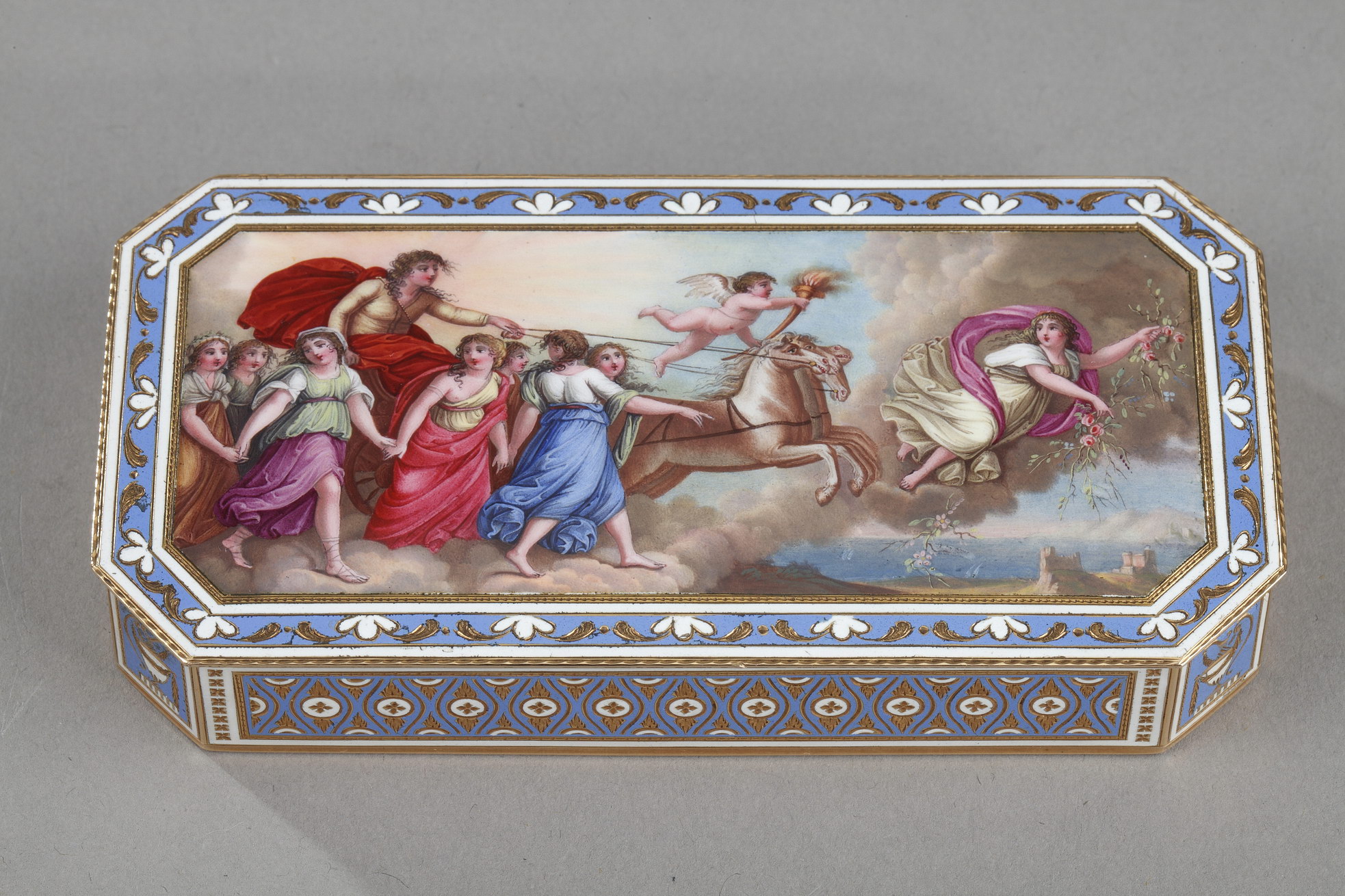
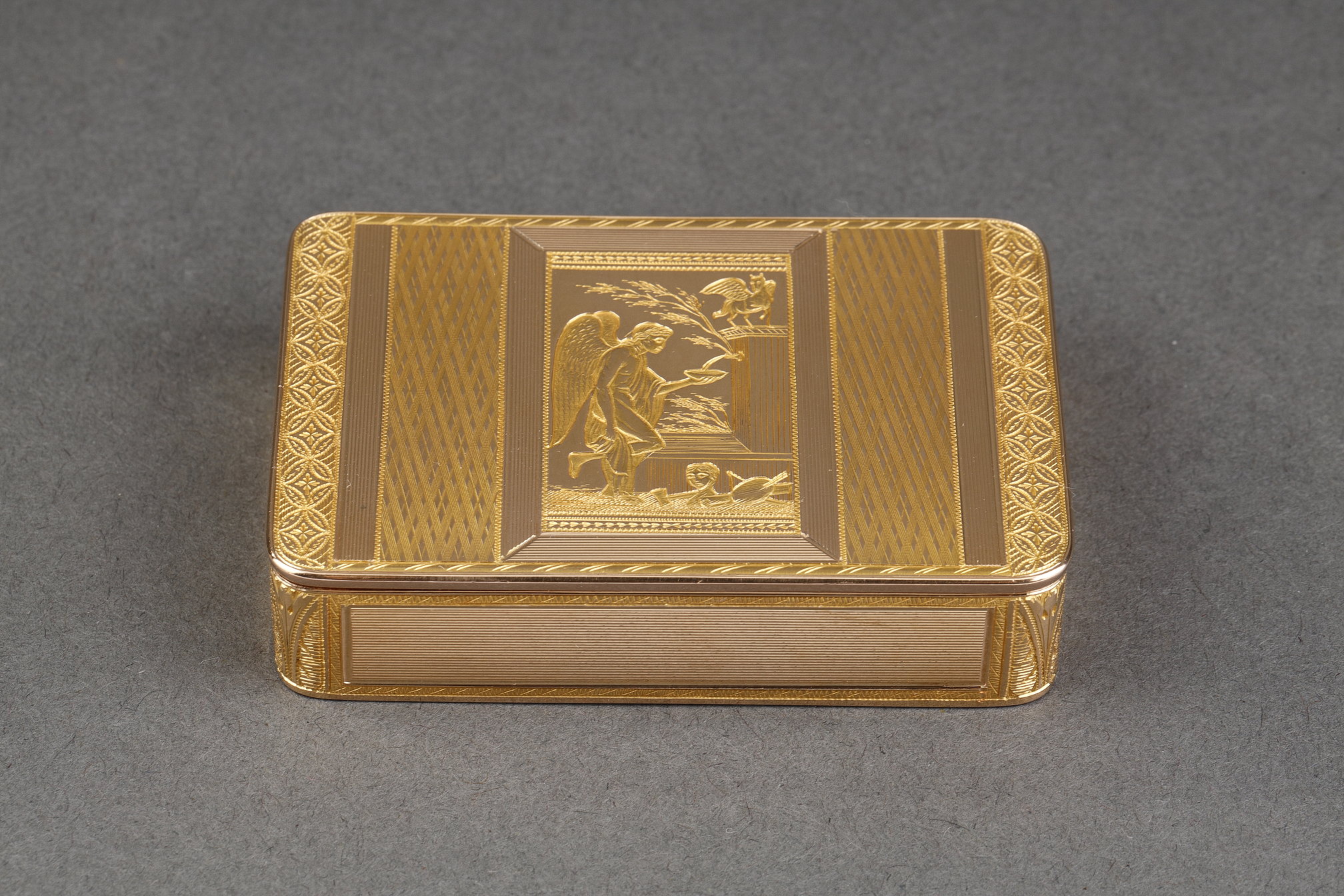
Gold snuffboxes were crafted using a variety of luxurious techniques and materials, including:- Solid gold (18 or 22 karat), such as this exquisite rectangular snuffbox featuring an allegorical scene :
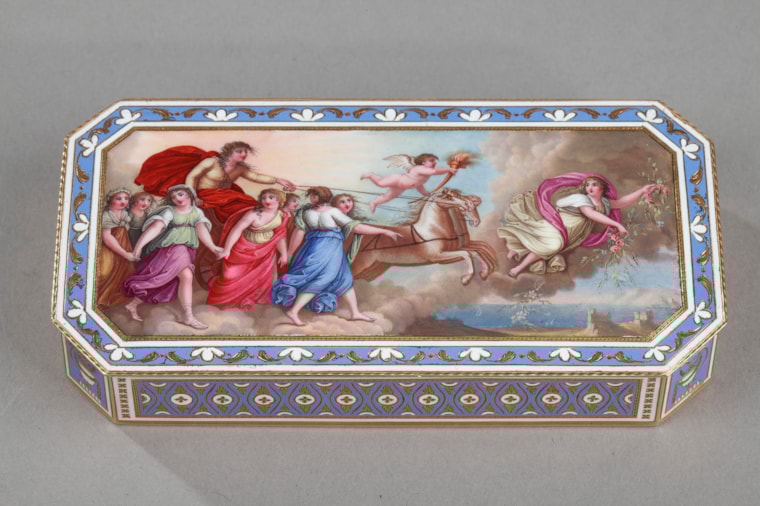
- Enamelwork, like this Swiss snuffbox adorned with painted enamel scenes by Guidon, Rémond, and Gide (late 18th century) :
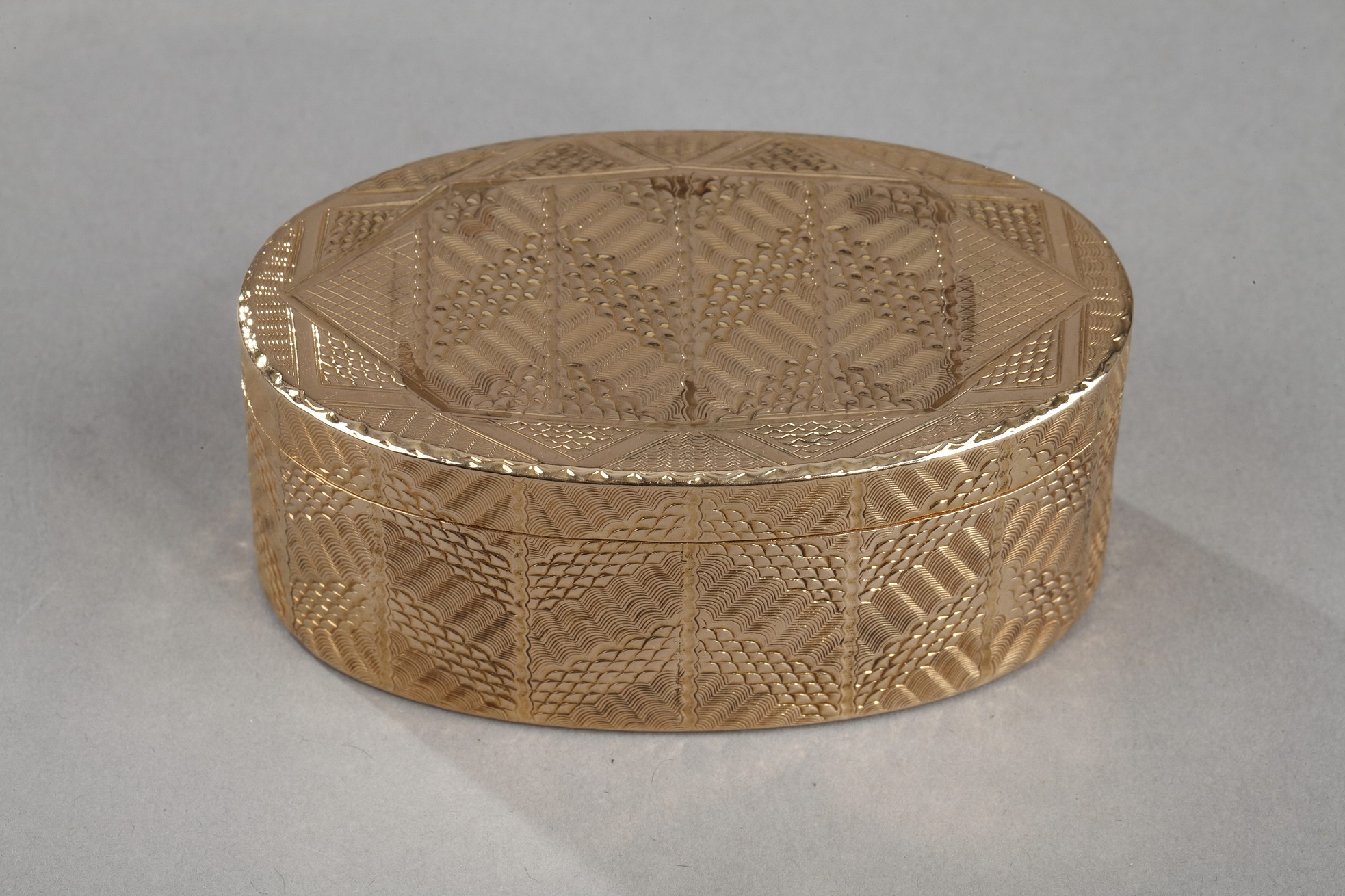
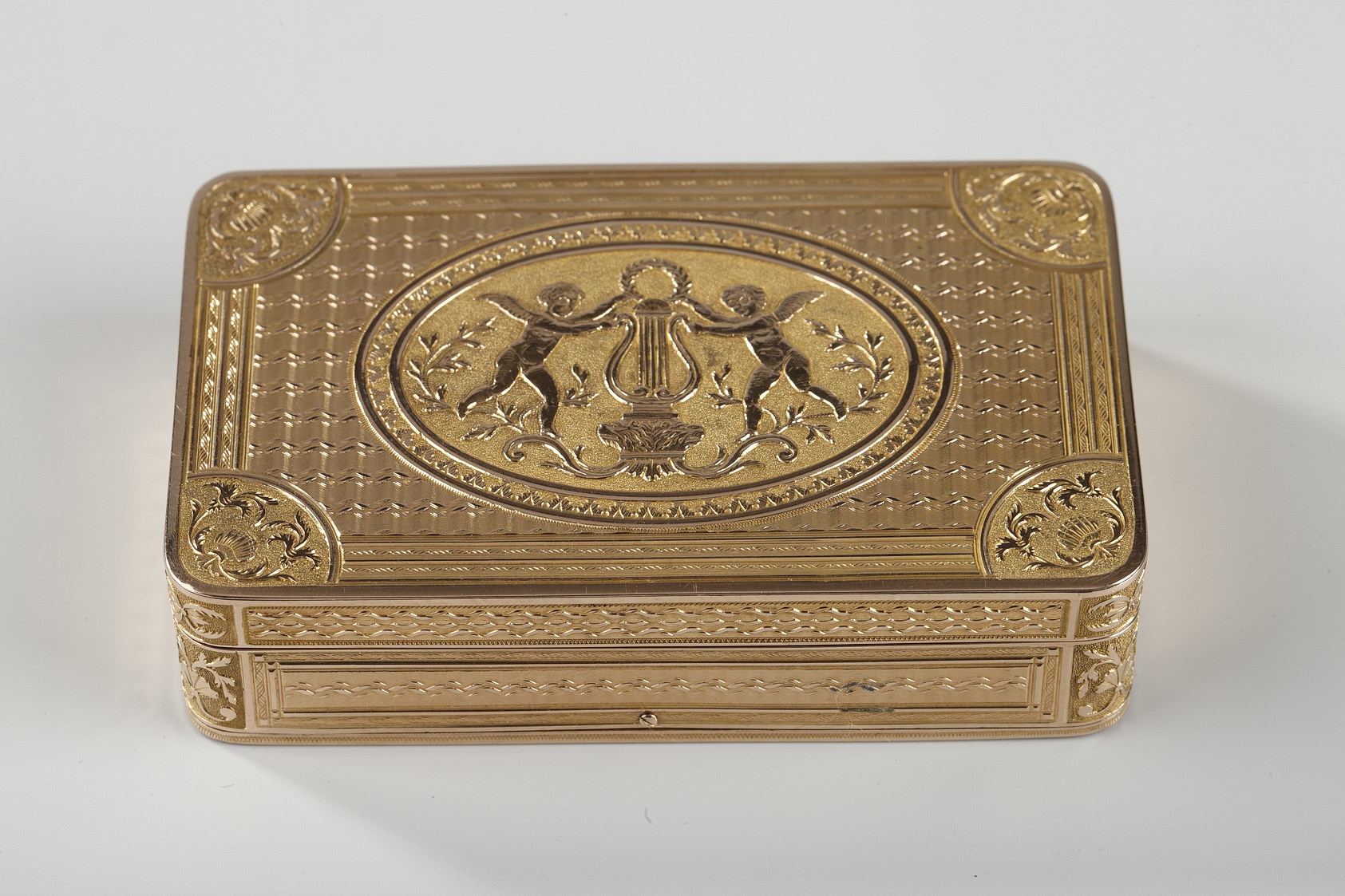
- Engine-turned (guilloché) gold, as seen in this 19th-century snuffbox with intricate geometric engravings :
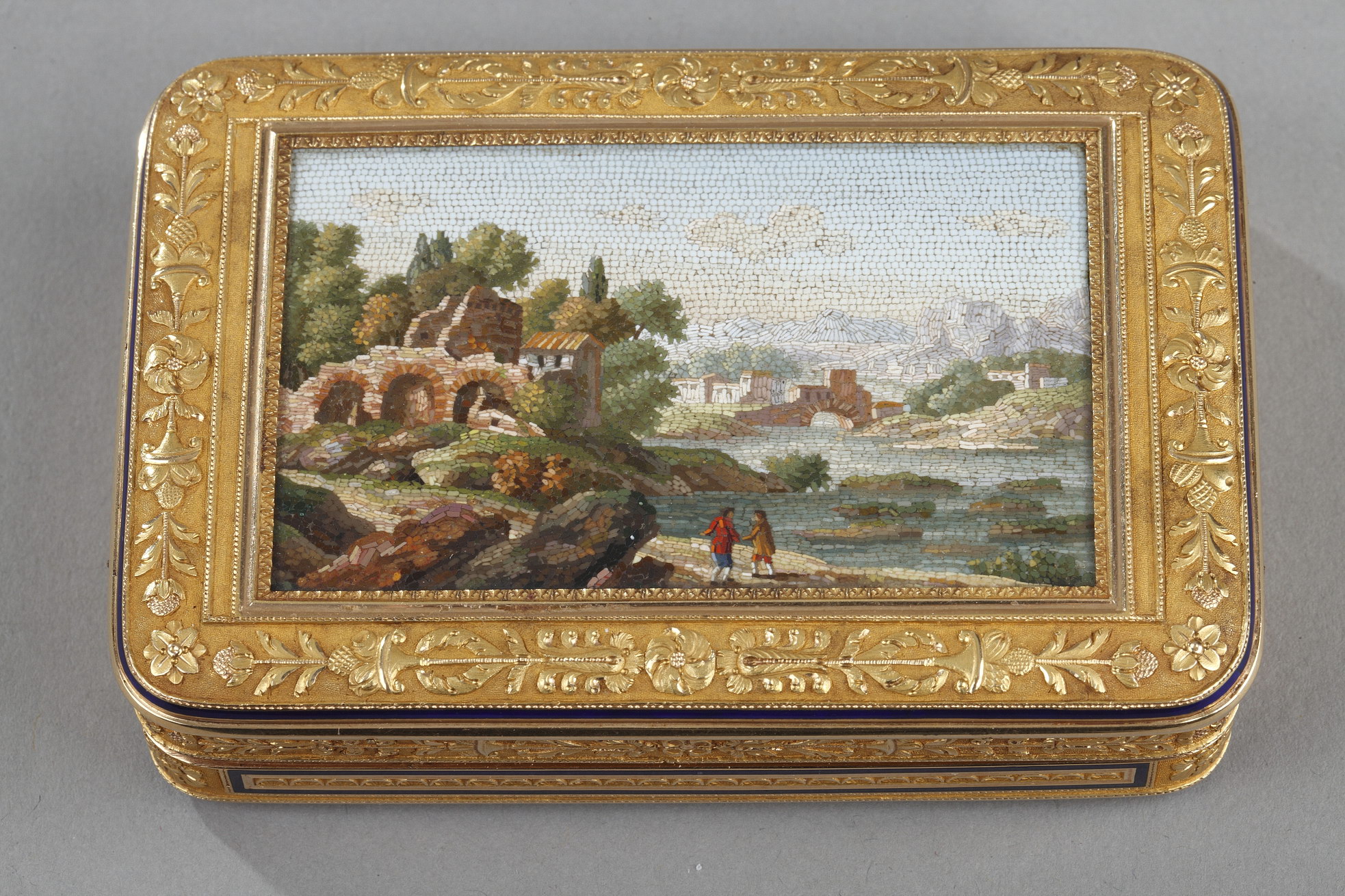
- Gold inlaid with precious stones (diamonds, rubies, emeralds) or micro-mosaics, such as this box depicting a landscape in micro-mosaic :
- Miniature paintings, like this snuffbox featuring a portrait by Louis-Nicolas Van Blarenberghe :
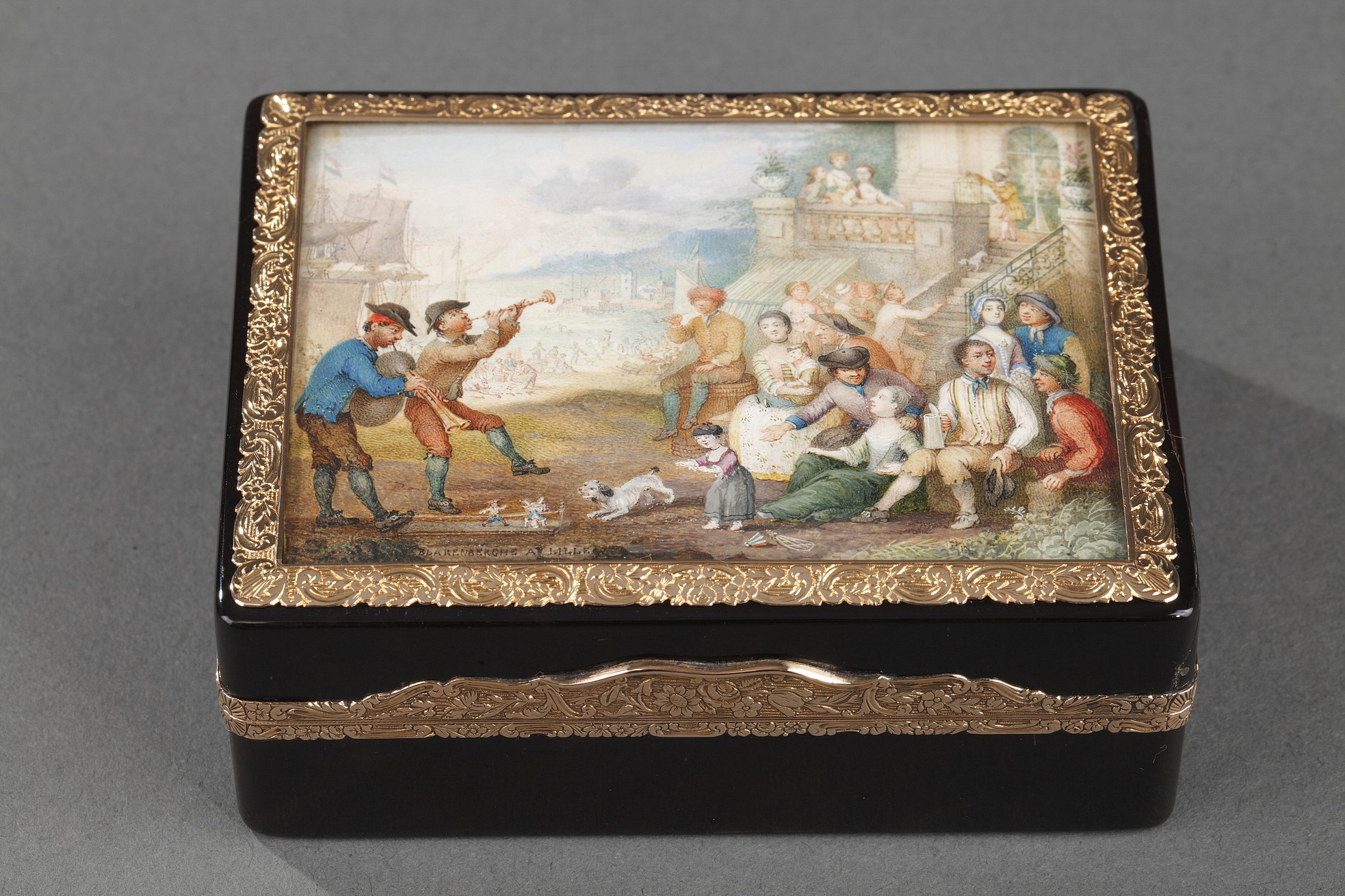 Key techniques included:
- Chasing : sculpting the metal
- Repoussé : raising relief through hammering
- Engraving : incised designs
- Enameling : painted enamel decoration
Shapes and Decorative Motifs
Snuffboxes came in a variety of forms:- Rectangular snuffboxes are the most common, such as this gold box :
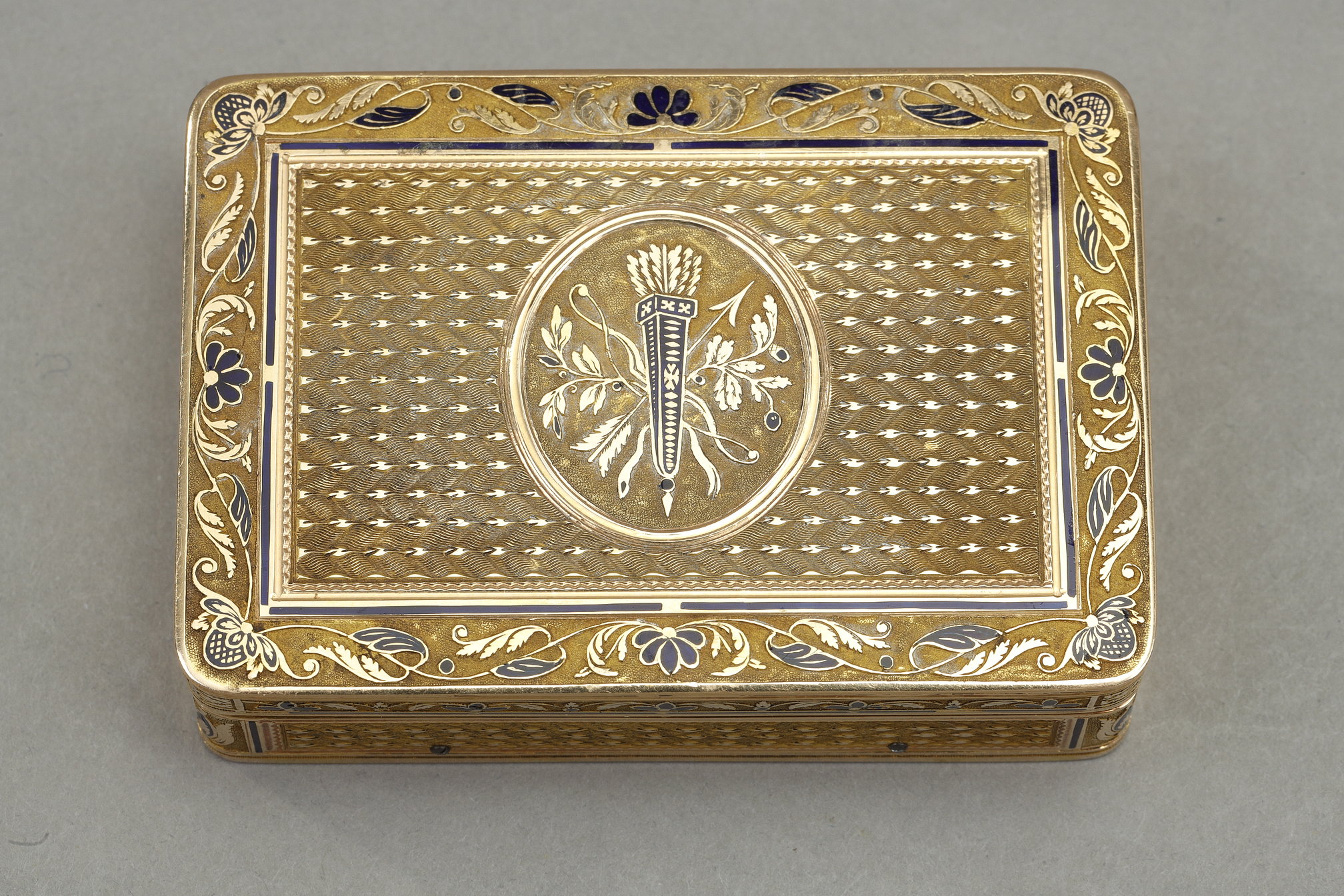
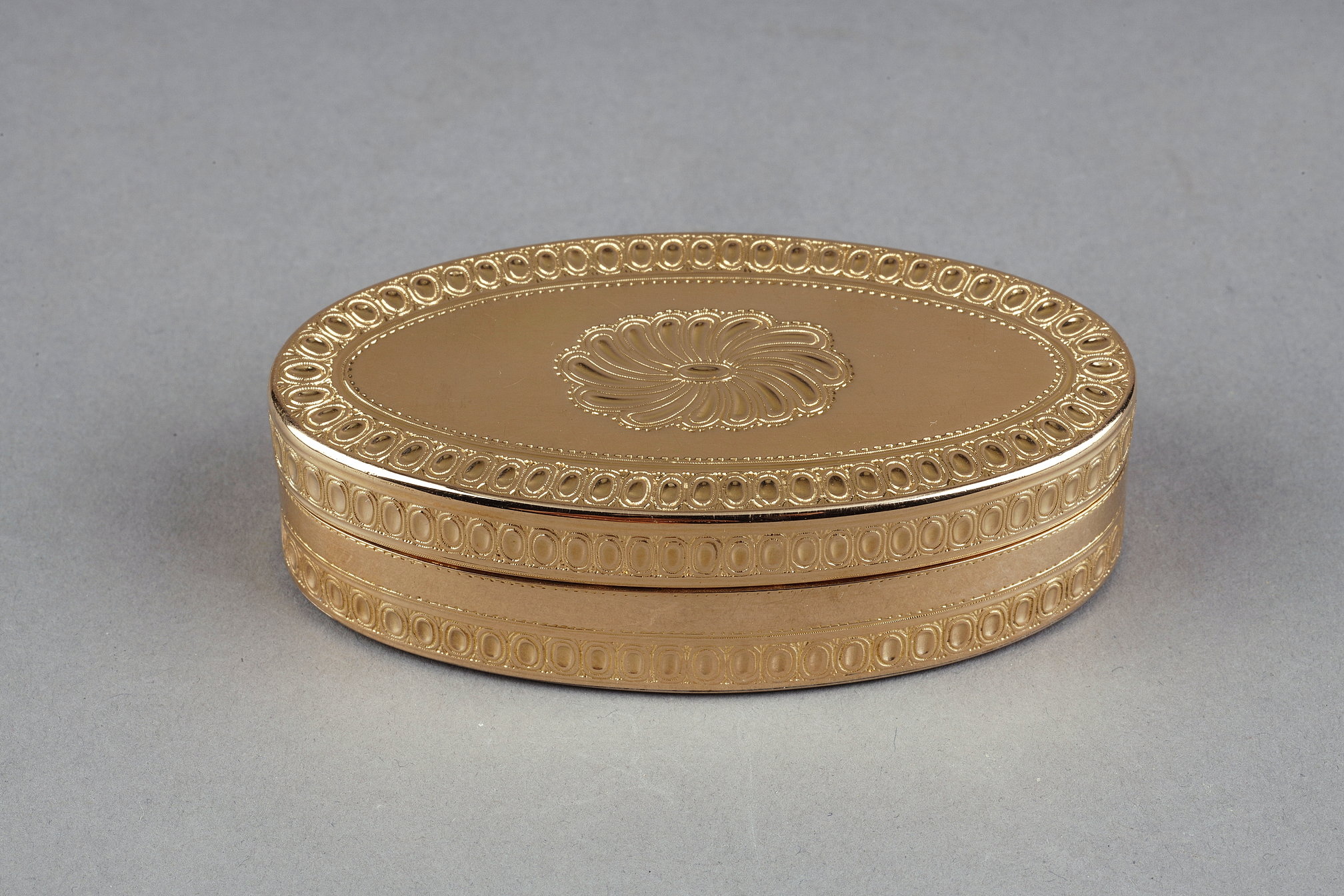
- Oval snuffboxes are mainly used for the Rococo style, such as this gold box :
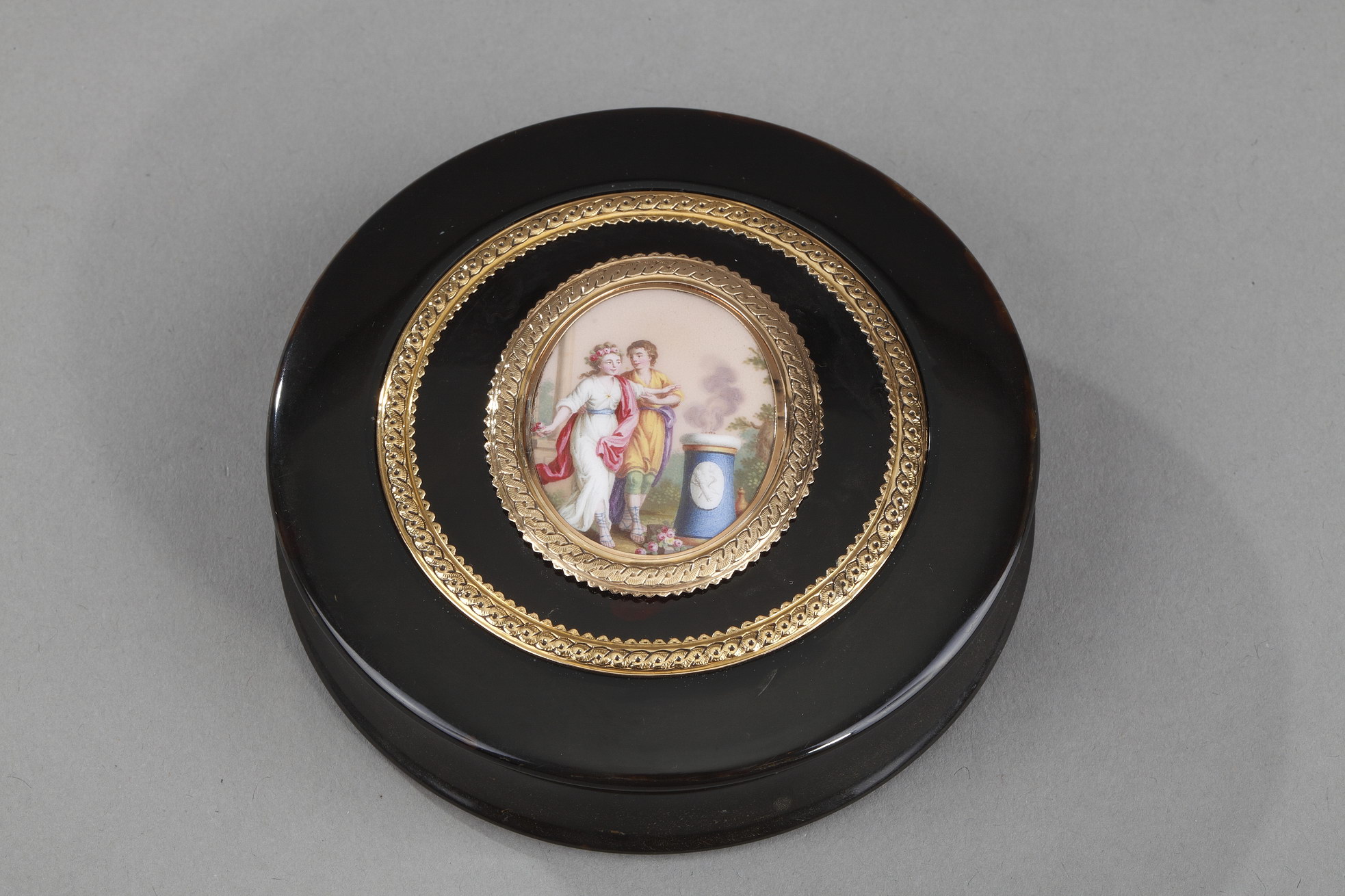
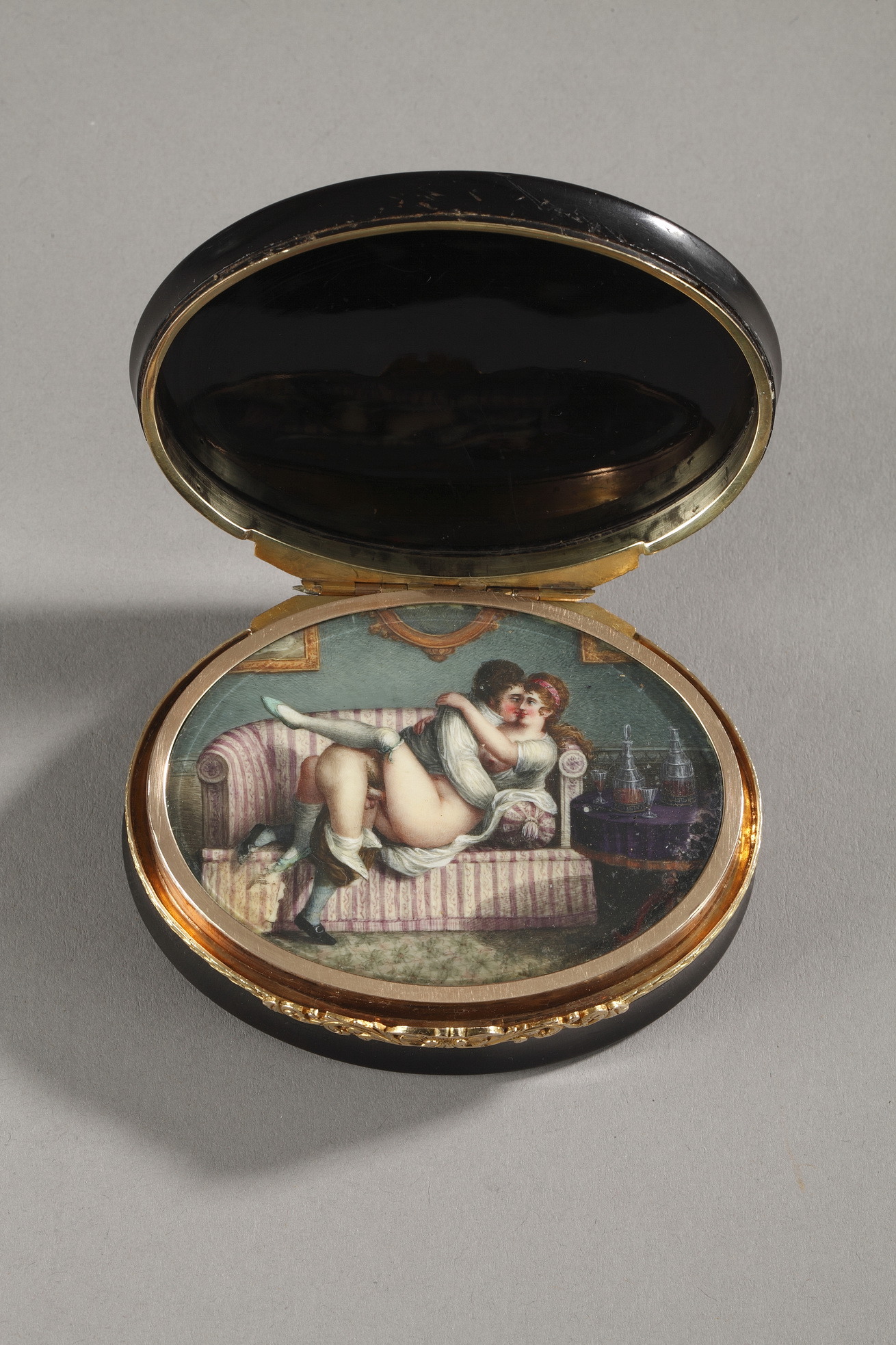
- Round snuffboxes are inspired by "bonbonnières" (candy boxes), such as this box with a miniature on it:
- Snuffboxes with shapes such as books, shells, or symbolic objects, like this beautiful gold box :
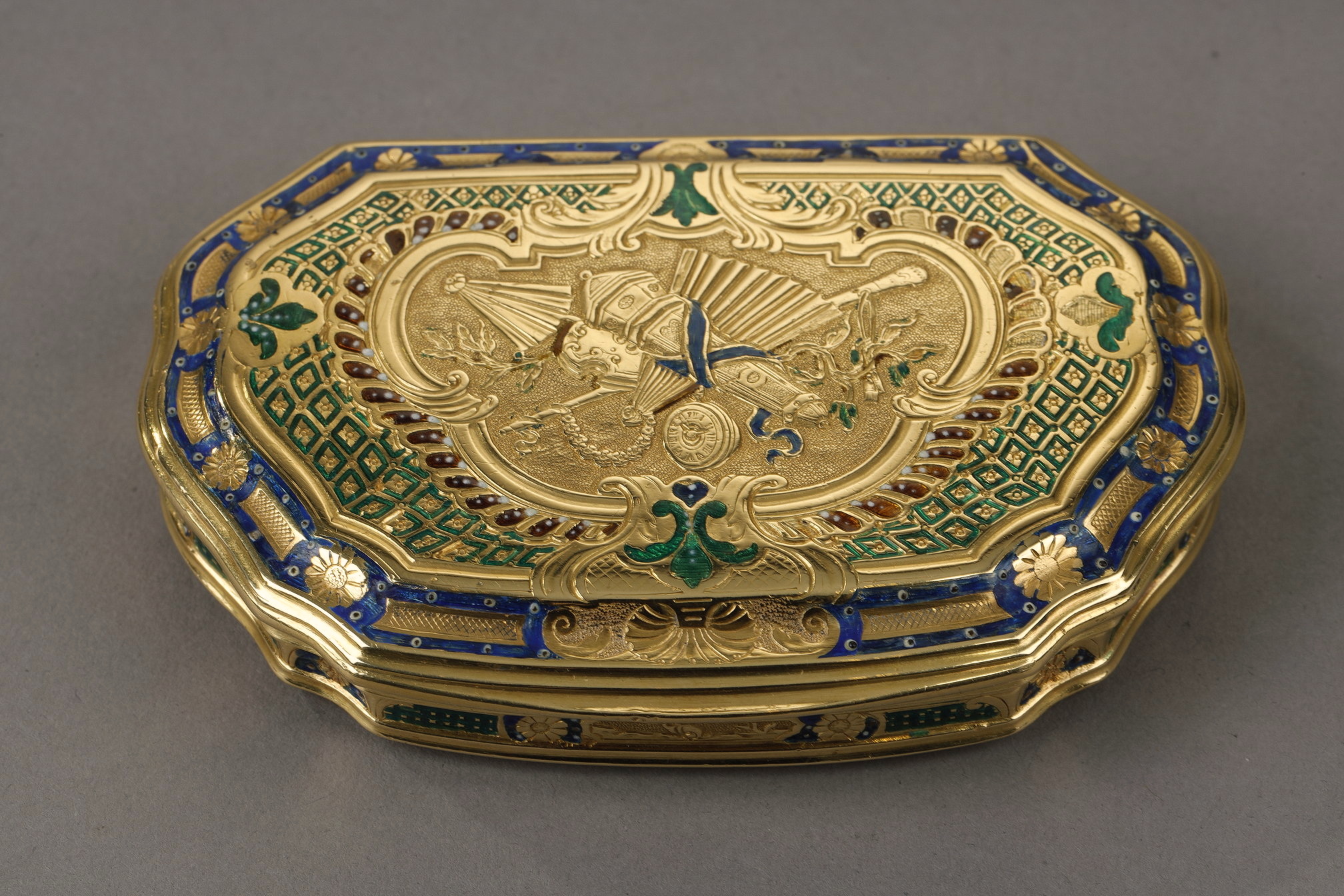 Themes reflected the tastes of the era:
- Gallant scenes : romantic encounters, shepherds, pastoral festivities...
- Allegories : Justice, Music, the Arts
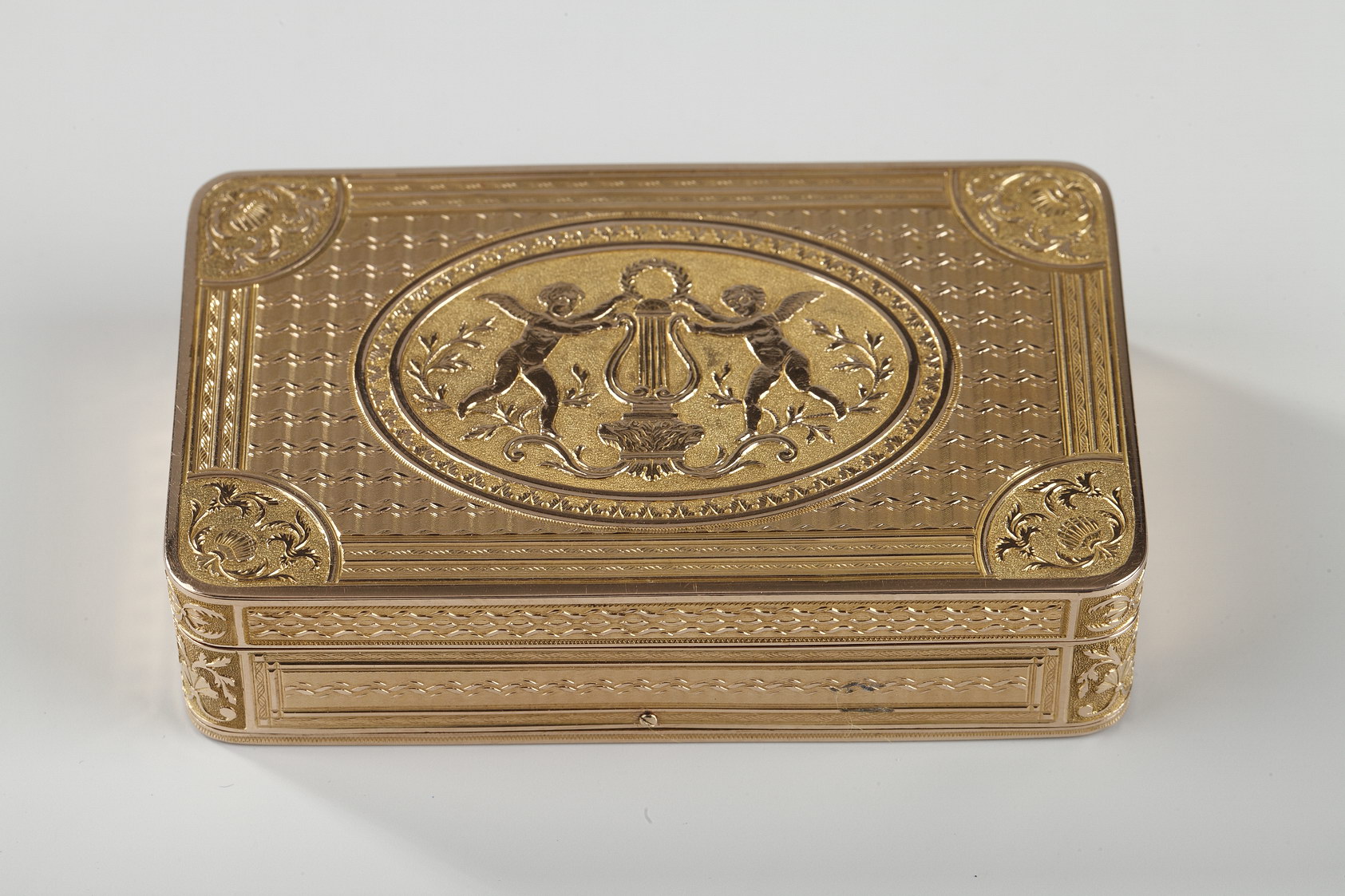
- Portraits : royalty and famous figures
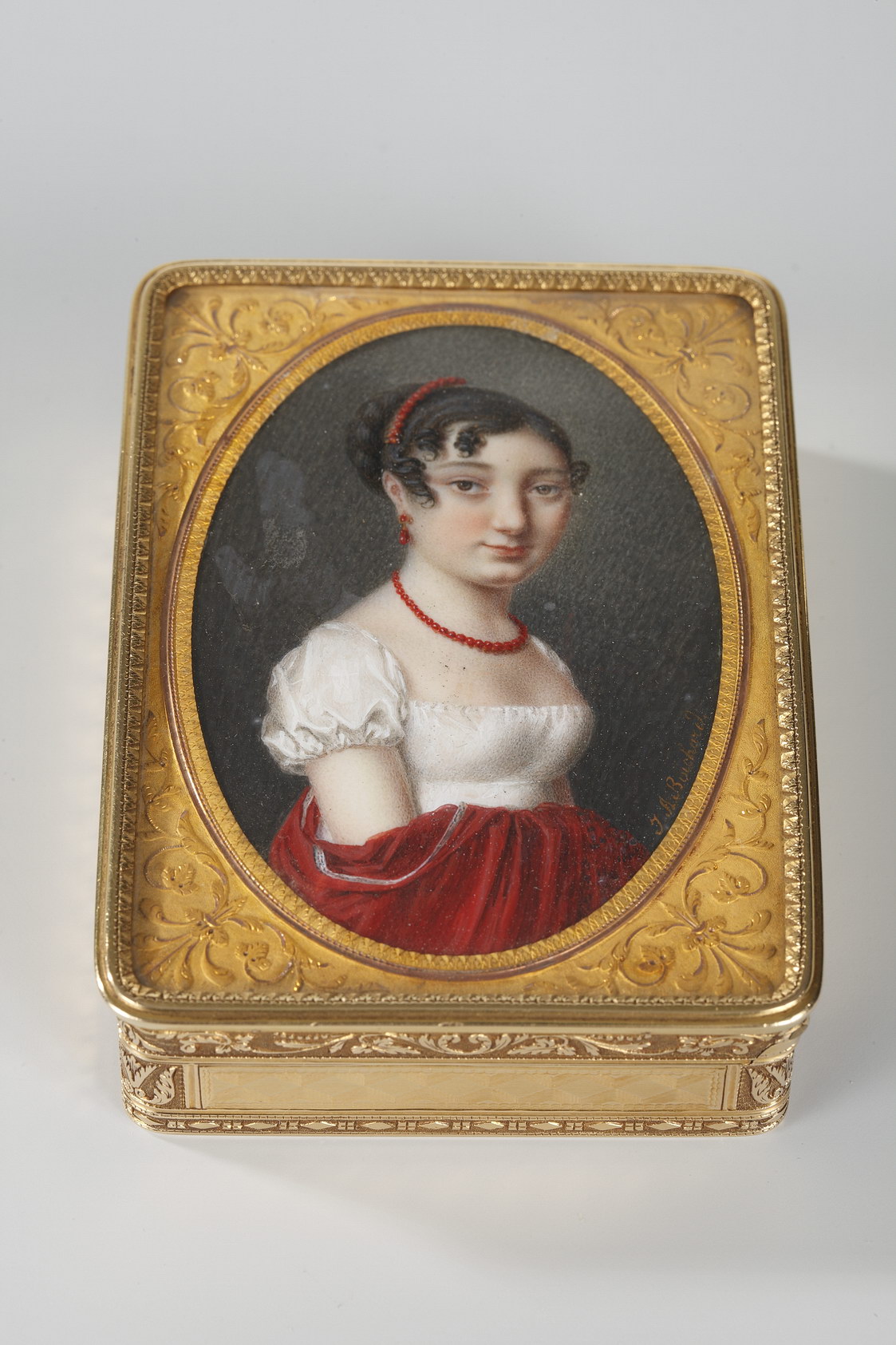
- Landscapes inspired by Dutch or Italian painting
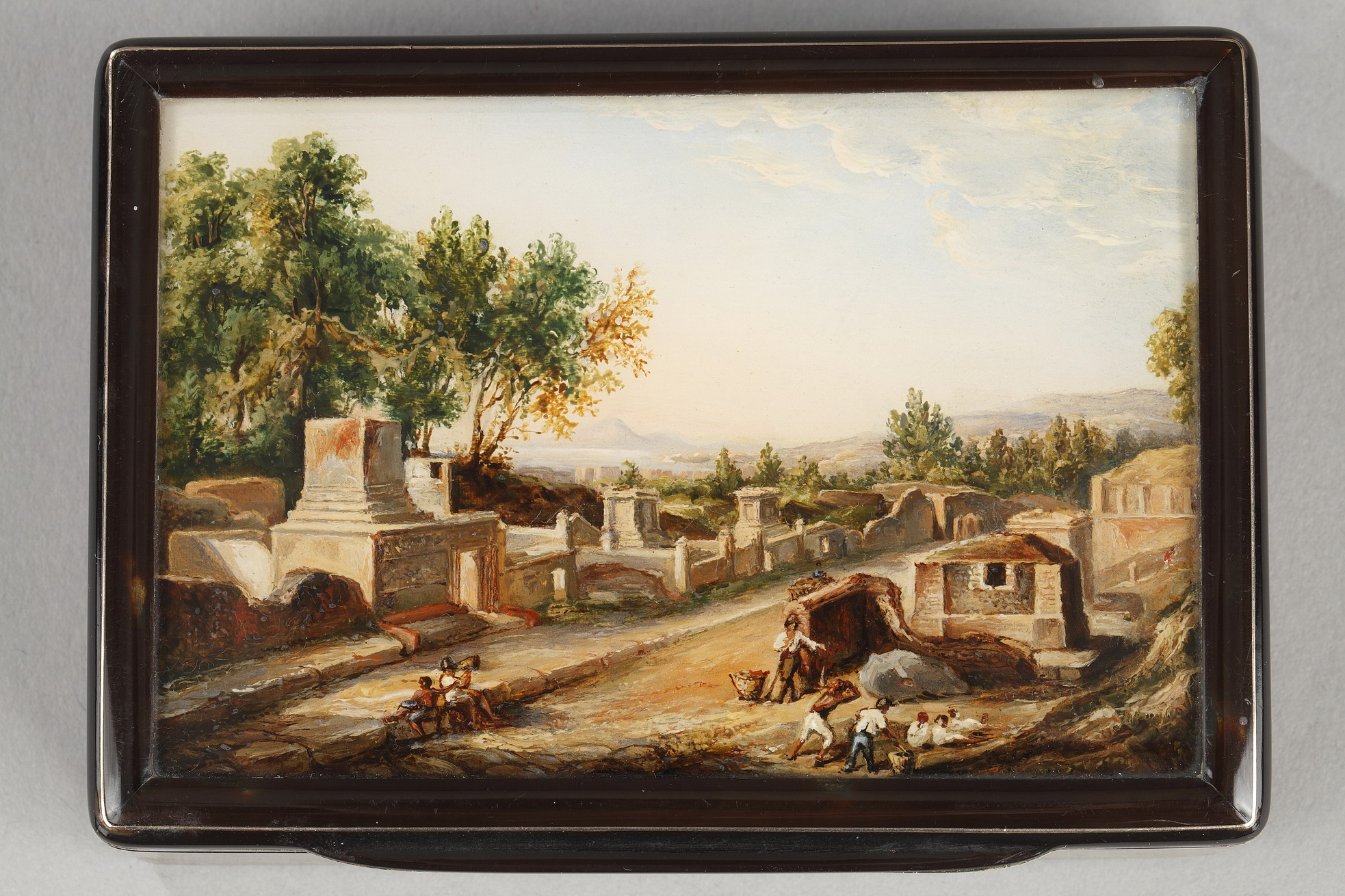
- Erotic scenes known as "secret snuffboxes"
III. A legacy of Craftmanship and Prestige
Far more than mere accessories, 18th- and 19th-century gold snuffboxes are historical artifacts, masterpieces of goldsmithing, and tangible investments. Whether you are a passionate collector, a history enthusiast, or a discerning investor, these exquisite pieces deserve a place of honor in any heritage collection.MAILING LIST

COOKIE POLICY
This website uses cookies to ensure you get the best experience on our website
1. THE TYPE OF INFORMATION WE COLLECT AND HOW
Essential Cookies - The site owner has indicated that these are essential to the running of the site.
Cookie Guard - This cookie is essential for storing the status of your cookie choices whilst using this site.
ASP.NET Session - This cookie is used to track important logical information for the smooth operation of the site
ASP.NET User Roles - This cookie is used to store information about authenticated user roles
Non-Essential Cookies - The site owner has approved these cookies but you may turn them off.
Facebook - Facebook uses cookies to track the sites you visit
Twitter - Twitter uses cookies to maintain widgets
AddThis - The cookie is created and read by the AddThis social sharing site JavaScript on the client side in order to make sure the user sees the updated count if they share a page and return to it before our share count cache is updated. No data from that cookie is sent back to AddThis and removing it when disabling cookies would cause unexpected behavior for users
ShareThis - This cookie is set as part of the ShareThis service and monitors "click-stream" activity
Google Analytics : These cookies are used to collect information about how visitors use our site. We use the information to compile reports and to help us improve the site. The cookies collect information in an anonymous form, including the number of visitors to the site, where visitors have come to the site from and the pages they visited.
Recently Viewed Artworks
This cookie is used to store information about your recently viewed artworks
TERMS AND CONDITIONS OF SALE
Applicable from 04/10/2023
PURPOSE AND SCOPE OF APPLICATION
The present general terms and conditions of sale (GTCS) form the basis for commercial negotiation and are systematically sent or handed to each purchaser to enable them to place an order.
The general terms and conditions of sale described below detail the rights and obligations of Galerie des Arts and its customer in connection with the sale of the following goods: objets de vertu, silverware, decorative pieces, enamel, ivory and opaline.
Acceptance of the quotation/order form, including the clause "I acknowledge that I have read and accept the attached general terms and conditions of sale", implies the buyer's unreserved acceptance of these general terms and conditions of sale.
PRODUCTS
The products offered for direct sale by Galerie des Arts are those shown on the www.ouaissantiquites.com site, on the day of consultation of the said site by the Internet user, and within the limits of their availability. The illustrations presented on the site reflect the products for sale on the site, except in the limited cases inherent in the technical characteristics of the Internet (resolution and colors of the user's screen....). Due to the specific nature of the Internet, the company does not guarantee the availability of products on its site in real time. In the event that a product is unavailable, the company will inform Internet users by means of its website or by sending an e-mail to a valid e-mail address provided by the customer. The company will then offer to replace the product ordered by an equivalent product (quality and price), or a credit note, or to exercise your right of rescission (cancellation of your order). Due to the specific nature of the products offered by Galerie des Arts, i.e. antique and rare objects, and if the object offered is sold, it is almost impossible to offer another identical product.
PRICES
The prices of goods sold are those in force on the day the order is taken. They are denominated in euros and include VAT. Delivery charges are payable by the customer, unless otherwise stipulated during the ordering process. The different delivery options (with their prices) are presented during the order process and specified in the order summary. Payment of the full price must be made at the latest on delivery of the products, unless otherwise specified during the order process and mentioned on the invoice. In the event of delivery of products outside France, customs taxes and formalities are the sole responsibility of the Customer, unless otherwise specified. The customer undertakes to check the possibilities of importing the products ordered with regard to the territory of the country of delivery. Galerie des Arts reserves the right to modify its prices at any time. However, it undertakes to invoice the goods ordered at the prices indicated when the order is placed.
TERMS OF PAYMENT
Orders can be paid for:
- by credit card (on site);
- by bank transfer;
Payment must be made before goods are dispatched or delivered.
DELIVERY
Delivery is made :
- either by handing over the goods directly to the buyer ;
- or by sending the goods to the place indicated by the purchaser at the time of ordering.
The delivery time indicated when the order is lace dis given as an indication only and is in no way guaranteed.
INCOMPLETE OR NON-CONFORMING DELIVERY (DUE TO THE CARRIER) :
The parcel may be damaged or its contents may have been partially or totally stolen. If you notice such an error, please mention it on the carrier's delivery note and refuse the product by sending it back to us with a 170 "spoliation report". Should you become aware of such an error after the carrier's departure, please notify us by e-mail at info@ouaissantiquites.com or by telephone within a maximum of 72 working hours following receipt of the order. In accordance with article 133-3 of the French Commercial Code, please send your justified complaint by registered letter to the carrier within 3 days (not including public holidays).
INCOMPLETE OR NON-CONFORMING DELIVERY (DUE TO THE COMPANY) :
Despite the care taken in the preparation and packaging of products, an error may have occurred during packaging. If you notice such an error, please report it to us as soon as possible, and if possible within 72 working hours of receipt of the order. This can be done by e-mail to info@ouaissantiquites.com or by telephone.
LOST PARCELS:
If a parcel is lost by one of our transport service providers, please inform us as soon as possible. The company will make inquiries with the relevant departments.
In the event of missing or damaged goods in transit, the purchaser must make all necessary reservations on the order form upon receipt of the said goods. These reservations must also be confirmed in writing within five days of delivery, by registered letter with acknowledgement of receipt addressed to the company.
Designed and powered by Masterart